The chili pepper is one of nature’s great accidents. Originally, the plant developed its fiery heat—a compound called capsaicin—for one simple reason: to keep mammals away. It was a strict defense mechanism designed to cause pain so the plant could survive and reproduce. But instead of avoiding it, humans sought it out. We took a plant that actively told us to stay away and made it the cornerstone of global cooking.
Thousands of years ago in the Americas, the chili was already a daily staple. But it was during the global trade expansion of the 15th and 16th centuries that it truly took over. It bypassed the expensive, tightly controlled spice routes of the era and spread directly into the hands of everyday people. Within just a few decades, it completely transformed the local diets of India, Southeast Asia, and Europe. It was cheap to grow, easy to dry, and lasted for months in the pantry, making it the perfect ingredient for the masses.
But why do we rely on it so heavily in the kitchen? It is not just about making a meal spicy. The dried chili is a highly functional tool. When a chili dries, its natural sugars concentrate and its fruity, earthy flavors deepen. It acts as a flavor multiplier. The heat also triggers a physical response in our bodies, releasing endorphins and actually opening up our palate, which enhances our ability to taste the other ingredients in a dish.
In practical terms, the dried chili is incredibly versatile and works as a counterweight to heavy, protein-rich meals. You can toast them whole in a dry cast-iron skillet just until they become fragrant, waking up the dormant oils inside. From there, you can rehydrate them in warm water and blend them into a thick, rich paste to serve as the foundation for a heavy beef roast or a slow-cooked mutton dish.
If you are cooking a simple batch of lentils, dropping a whole dried chili into the boiling pot adds a deep, smoky undertone without overwhelming the dish with sharp heat. You can also crush them into rough flakes to create a dry rub for fish or poultry, using the heat to cut cleanly through the natural fats of the meat. It is a single ingredient that can balance out sweetness, cut through heavy animal fats, and build a complex base of flavor from nothing.
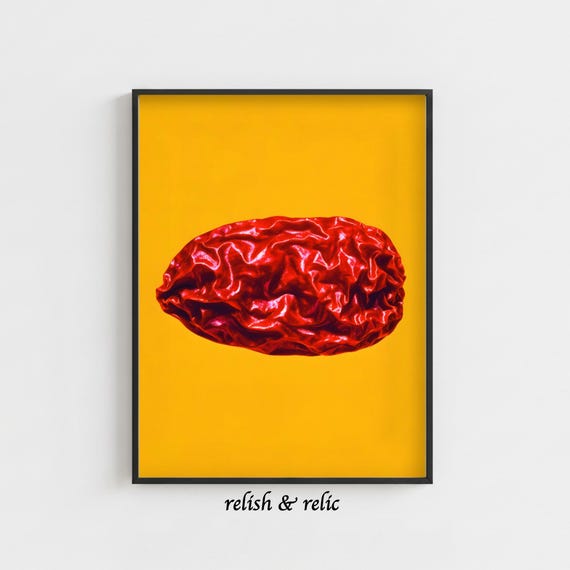
This print captures the chili in its most patient and powerful state. A dried pod is raw potential, sitting on the kitchen counter waiting to be activated. The deep, dark reds and rough, wrinkled textures tell the story of its long history and its enduring utility in our homes. This piece from Relish & Relic isn’t just a simple picture of a vegetable; it is a tribute to a highly efficient ingredient that fundamentally changed the way the world eats.