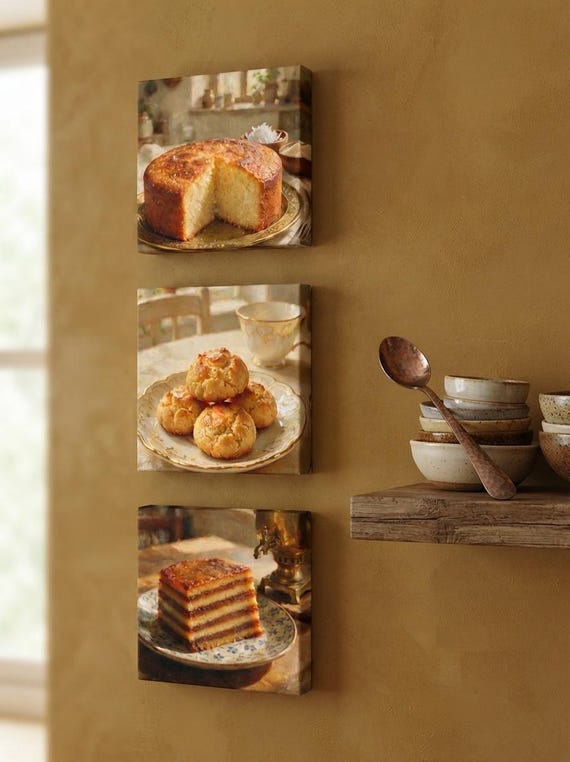
Bebinca is an exercise in structural endurance. It is not baked in the traditional sense; it is engineered. The dessert is a direct biological output of the sixteenth-century collision between European convent baking and the tropical resource network of the Indian coast. The Portuguese arrived in Goa with a strict reliance on egg yolks—a byproduct of using egg whites to starch religious garments—but they lacked access to standard dairy or soft wheat. The local environment provided a high-efficiency alternative: dense coconut milk, raw cane sugar, nutmeg, and clarified butter, known as ghee.
The result is a culinary architecture built on extreme repetition. Bebinca is constructed in a minimum of seven distinct layers, often reaching up to sixteen. It operates as a strict, physical loop. A thin layer of batter is poured and subjected to intense, direct top-heat until the sugars caramelize into a dark, resistant skin. Only then is the next layer applied. This continuous application of heat and liquid fat creates a highly stratified, dense matrix. It completely defies modern kitchen efficiency, demanding total manual oversight and precise thermal management.
In a functional dietary system, bebinca serves a highly specific purpose. It is a concentrated energy block. You do not consume it in high volumes. After eating the sharp, heavily acidic, and capsaicin-loaded proteins typical of the Goan coast—such as a heavily spiced beef roast or sharp fish curries—the body requires a metabolic counterweight. The dense lipids from the coconut milk and ghee act as a biological dampener, neutralizing the residual heat and settling the palate after an aggressive meal.
Its utility extends well beyond immediate consumption. Because of its structural density and the high volume of clarified butter, bebinca possesses an exceptional shelf life. It acts as a preserved calorie store that resists the extreme humidity of the monsoon season. In the kitchen, serving it requires precision. It must be sliced in thin, deliberate cross-sections to expose the internal geometry of its layers. Often, it is gently warmed in a cast-iron pan just enough to reactivate the dormant fats, softening the structure before it is served.
This vintage print strips away the cultural noise to focus entirely on the physical architecture of the dessert. It highlights the stark, contrasting strata—each dark line functioning as a visual ledger of time, heat, and human labor. This piece from Relish & Relic does not just depict a traditional sweet; it is a high-resolution observation of patience and a tribute to one of the most mechanically demanding foods ever designed.